
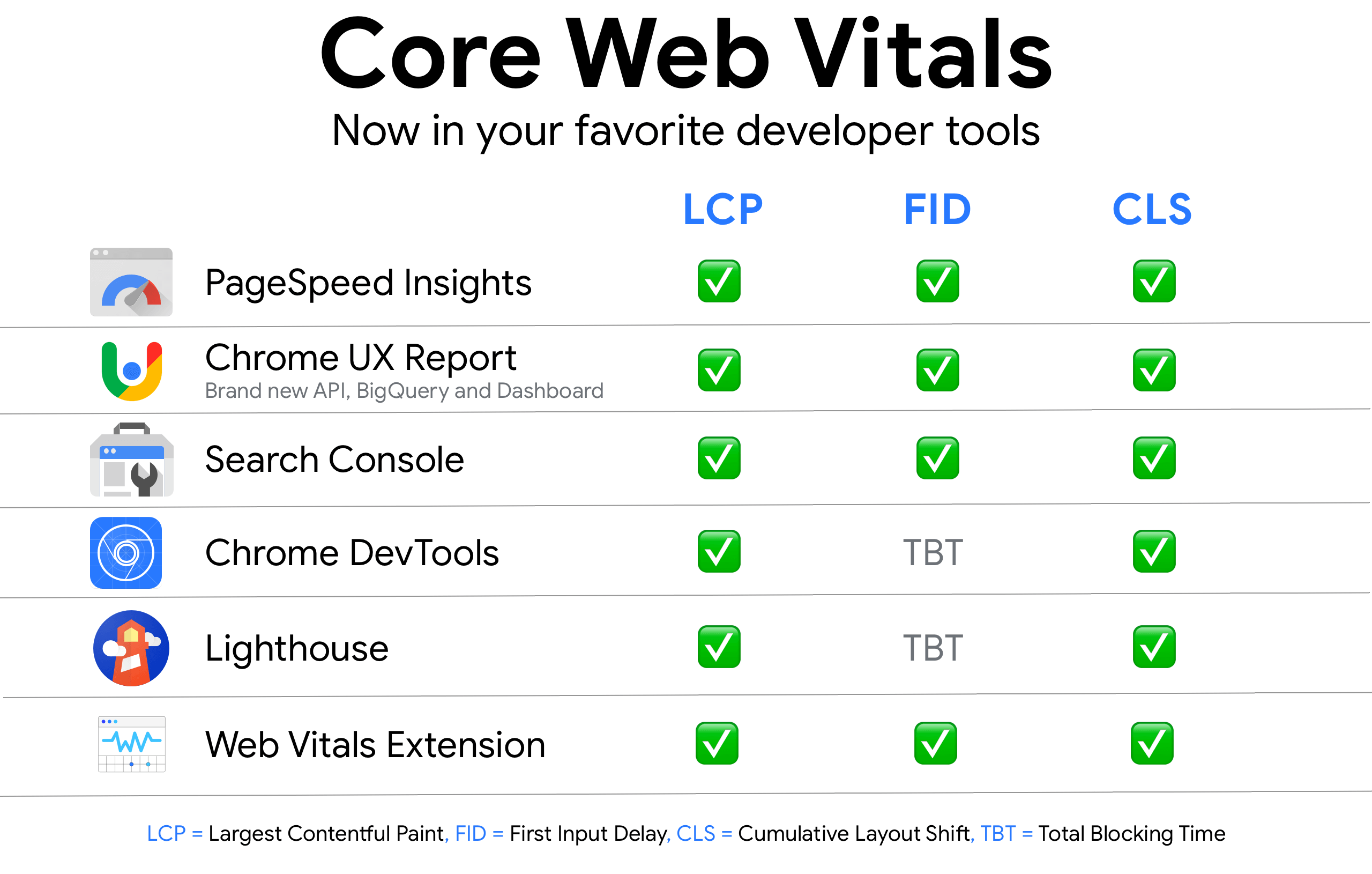
Explanation of Core Web Vitals (CWV) and their importance for SEO
Core Web Vitals are a set of metrics introduced by Google to measure the user experience of websites. These metrics play a crucial role in search engine optimization (SEO) because Google considers them as ranking signals. In other words, websites that provide a better user experience by meeting the Core Web Vitals standards are more likely to rank higher in search results.
Breakdown of metrics: Largest Contentful Paint (LCP), First Input Delay (FID), and Cumulative Layout Shift (CLS):
- Largest Contentful Paint (LCP): This metric measures the time it takes for the largest content element (such as an image or text block) to load and become visible on the screen. A good LCP score ensures that users don’t have to stare at a blank page for too long, improving their overall experience.
- First Input Delay (FID): FID measures the time it takes for a website to respond to a user’s first interaction, such as clicking a button or typing in a field. A low FID score indicates that the website is responsive and doesn’t keep users waiting unnecessarily.
- Cumulative Layout Shift (CLS): CLS measures the amount of unexpected layout shifts that occur on a webpage. When elements on a page move unexpectedly, it can be frustrating for users, especially if they accidentally click on something they didn’t intend to. A low CLS score means that the page layout is stable and doesn’t shift around as it loads.
Practical tips for optimizing websites to improve these metrics:
Optimize images and other media: Compressing and resizing images can significantly improve LCP scores by reducing the file size and loading time.
Implement code splitting and lazy loading: Code splitting allows you to load only the essential JavaScript and CSS required for the initial render, while lazy loading defers the loading of non-critical resources until they’re needed. Both techniques can improve LCP and FID scores.
- Use browser caching: Caching static resources like CSS, JavaScript, and images can reduce load times and improve LCP scores on repeat visits.
- Minimize layout shifts: Reserving space for ads, images, and other dynamic content can prevent layout shifts and improve CLS scores.
- Optimize third-party scripts: External scripts can significantly impact FID and other performance metrics. Consider deferring non-critical scripts or exploring alternatives.
Real-world examples of successful optimization strategies:
- Etsy, the popular e-commerce platform, improved their LCP scores by optimizing their image delivery pipeline, reducing image file sizes, and implementing lazy loading for non-critical images.
- Trivago, a travel website, reduced their FID scores by optimizing their JavaScript bundles, implementing code splitting, and deferring non-critical scripts.
- Pinterest implemented techniques like reserving space for dynamic content and using CSS containment to improve their CLS scores and provide a more stable layout experience for users.
Impact of Core Web Vitals on Google search ranking algorithm:
In May 2021, Google announced that Core Web Vitals would become an official ranking factor for their search algorithm. This means that websites that meet the recommended thresholds for LCP, FID, and CLS are more likely to rank higher in search results, while those that perform poorly on these metrics may see a negative impact on their search rankings.
By actively optimizing for Core Web Vitals, website owners can improve the overall user experience, reduce bounce rates, and potentially increase their visibility in search results. It’s important to note that Core Web Vitals are just one of many factors that Google considers in its ranking algorithm, but they have become increasingly significant in the ever-evolving landscape of SEO.
Case studies showcasing websites that have successfully improved Core Web Vitals and their resulting SEO performance:
- COOK: This meal kit delivery service in the UK focused on optimizing their Core Web Vitals, particularly LCP and CLS. By implementing techniques like lazy loading images, deferring non-critical resources, and reserving space for dynamic content, they saw a significant improvement in their CWV scores. As a result, their overall website traffic from organic search increased by 17%, and their search rankings for key terms improved substantially.
- Carousell: This popular e-commerce platform in Southeast Asia tackled their FID scores by optimizing their JavaScript bundles, implementing code splitting, and deferring non-critical scripts. After their optimization efforts, they saw a 30% improvement in FID scores, leading to a better user experience and increased engagement metrics, such as time on site and conversion rates.
Comparison of websites before and after implementing Core Web Vitals optimization techniques:
Before optimization, many websites struggled with slow loading times, unresponsive interfaces, and unstable layouts, leading to poor Core Web Vitals scores. For instance, a popular news website had an average LCP score of 6 seconds, which is considered poor according to Google’s standards.
After implementing optimization techniques like image compression, code splitting, and reserving space for dynamic content, the same news website saw their average LCP score improve to 2.5 seconds, which is considered good. This improvement in loading speed and visual stability led to a reduction in bounce rates and an increase in user engagement metrics like time on site and pageviews per session.
Similarly, an e-commerce website with a high CLS score of 0.4 (which is considered poor) saw a significant improvement to a CLS score of 0.1 (which is considered good) after implementing techniques like reserving space for dynamic content and using CSS containment. This resulted in a more stable layout and reduced instances of accidental clicks, improving the overall user experience.
Explanation of tools and resources available for monitoring and improving Core Web Vitals:
- Google PageSpeed Insights: This free tool from Google analyzes a website’s performance and provides detailed reports on Core Web Vitals, including specific recommendations for improvement.
- WebPageTest: This open-source tool allows you to run performance tests from various locations around the world, providing valuable insights into how users in different regions may experience your website.
- Lighthouse: An open-source, automated tool for improving the quality of web pages, including performance metrics like Core Web Vitals.
- Chrome DevTools: The built-in developer tools in the Chrome browser offer various performance monitoring and auditing features, including real-time insights into Core Web Vitals.
- Web.dev: Google’s web fundamentals resource, which offers comprehensive guides, case studies, and best practices for optimizing Core Web Vitals and overall website performance.
Insights on the future trends and developments in the realm of Core Web Vitals and SEO:
As the web continues to evolve, the importance of Core Web Vitals and user experience metrics is likely to increase. Here are some potential future trends:
- Expanded Core Web Vitals: Google may introduce additional metrics or refine the existing ones to better measure and optimize the user experience across different device types and use cases.
- Increased emphasis on accessibility and inclusivity: Metrics that measure the accessibility and inclusivity of websites for users with disabilities or varying needs may gain prominence in search rankings.
- Integration with emerging technologies: As new technologies like Web Assembly, Progressive Web Apps (PWAs), and WebGPU become more prevalent, Core Web Vitals may evolve to account for their impact on user experience and performance.
- Real User Monitoring (RUM): Tools that measure Core Web Vitals and other performance metrics based on real user data, rather than simulated tests, may become more widely adopted.
- Automation and continuous optimization: As the importance of Core Web Vitals grows, website owners may increasingly rely on automated tools and continuous integration/deployment pipelines to monitor and optimize these metrics on an ongoing basis.
Overall, the focus on providing a seamless and efficient user experience is likely to remain a central pillar of SEO strategies, with Core Web Vitals playing a pivotal role in determining search rankings and website success.
Examples of websites that have significantly improved their SEO performance by optimizing for Core Web Vitals:
- Smashing Magazine: This popular web development blog and resource site focused on optimizing their LCP and CLS scores. By implementing techniques like lazy loading images, optimizing font delivery, and reserving space for dynamic content, they saw a significant improvement in their Core Web Vitals scores. As a result, their organic search traffic increased by 25%, and their rankings for competitive keywords improved.
- Udacity: The online learning platform, Udacity, tackled their FID scores by optimizing their JavaScript bundles, implementing code splitting, and deferring non-critical scripts. After their optimization efforts, they saw a 40% improvement in FID scores, leading to a more responsive user interface and increased user engagement metrics, such as course completion rates and retention.
How Core Web Vitals tie into the overall user experience of a website:
Core Web Vitals directly impact the overall user experience of a website. A website with poor LCP scores can frustrate users who have to wait too long for content to load, leading to higher bounce rates and abandonments. Similarly, a website with high FID scores can make the interface feel unresponsive and sluggish, diminishing the overall user experience. Lastly, high CLS scores can lead to unexpected layout shifts, causing users to accidentally click on the wrong elements or lose their place on the page, which can be incredibly frustrating.
By optimizing for Core Web Vitals, websites can provide a smoother, more efficient, and more enjoyable experience for their users, leading to increased engagement, lower bounce rates, and higher conversion rates.
Common pitfalls and how to overcome them:
- Overreliance on third-party scripts and resources: Many websites rely heavily on external scripts and resources, which can significantly impact performance and Core Web Vitals scores. To overcome this, website owners should audit their third-party dependencies, defer non-critical scripts, and explore alternatives or self-hosted solutions where possible.
- Lack of performance budgeting: Without clear performance budgets and targets, it’s easy for websites to become bloated and slow over time. Implementing performance budgets for metrics like file sizes, HTTP requests, and Core Web Vitals can help ensure that optimizations remain a priority.
- Neglecting responsive design: Some websites fail to account for varying device capabilities and network conditions, leading to poor performance on certain devices or connections. Implementing responsive design techniques and optimizing for different scenarios can help ensure a consistent experience across devices and networks.
- Insufficient testing and monitoring: Optimizing for Core Web Vitals is an ongoing process, and websites should regularly test and monitor their performance to identify and address issues promptly. Utilizing tools like PageSpeed Insights, WebPageTest, and Real User Monitoring (RUM) can provide valuable insights and help catch regressions early.
Impact on user engagement and retention:
Core Web Vitals have a direct impact on user engagement and retention on a website. Slow loading times, unresponsive interfaces, and unexpected layout shifts can lead to frustration, higher bounce rates, and lower conversion rates. On the other hand, websites that provide a smooth and efficient experience, as measured by good Core Web Vitals scores, are more likely to keep users engaged and encourage them to explore further.
For example, a study by Google found that websites with good LCP scores (loading in under 2.5 seconds) had a 24% higher likelihood of users becoming engaged and visiting multiple pages compared to websites with poor LCP scores. Similarly, websites with good FID scores (under 100ms) saw a 10% increase in user engagement compared to those with poor FID scores.
Ultimately, Core Web Vitals are not just about SEO; they are a crucial component of delivering an exceptional user experience, which in turn can lead to increased engagement, higher conversion rates, and better customer retention and loyalty.
Austin Okonji is our resident SEO expert, equipped with years of experience and a passion for driving organic traffic and improving online visibility. With a proven track record of success, Austin combines technical expertise with strategic insights to help businesses thrive in the digital landscape. (jayvickswriters@gmail.com)