
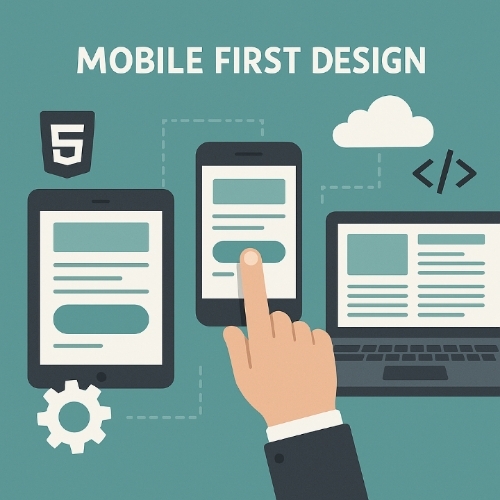
Why Mobile-First Design is the Future of Responsive Web Development
Discover why responsive design is essential for modern websites and how a mobile-first approach improves user experience, SEO, and conversions. Learn the key strategies today!
What Is Responsive Design and Why Is Mobile-First Important?
Introduction:
Imagine visiting a website on your phone, only to find tiny text, misplaced images, and buttons that refuse to tap. Frustrating, right? That’s where responsive design comes in—a game-changer in web development that ensures your site looks and works perfectly on any device. But why is mobile-first design taking over? With more than half of global web traffic coming from mobile devices, ignoring mobile users means losing visitors, sales, and credibility. In this article, we’ll break down responsive design, explain why mobile-first is no longer optional, and reveal how it impacts user experience, SEO, and business success.
Explanations for important phrases:
- Responsive Web Design:
Responsive web design (RWD) is an approach that allows websites to adapt to different screen sizes and resolutions. Instead of creating separate versions for desktops, tablets, and phones, RWD uses flexible grids, fluid images, and CSS media queries to deliver an optimal viewing experience. This eliminates the need for excessive zooming or horizontal scrolling, making navigation seamless.
- Mobile-First Approach:
A mobile-first strategy means designing a website for mobile devices before scaling up to larger screens. Since mobile users dominate internet traffic, this approach prioritizes performance, speed, and usability on smaller screens. It forces designers to focus on essential content, improving load times and overall efficiency.
- User Experience (UX):
User experience refers to how visitors interact with a website. A responsive, mobile-friendly design enhances UX by ensuring readability, easy navigation, and fast loading. Poor UX leads to high bounce rates, while a smooth experience increases engagement and conversions.
- CSS Media Queries:
CSS media queries are code snippets that apply different styling rules based on device characteristics like width, height, and orientation. They are the backbone of responsive design, allowing websites to rearrange layouts dynamically for different screens.
- SEO Benefits of Responsive Design:
Search engines like Google prioritize mobile-friendly websites in rankings. A responsive design improves SEO by reducing bounce rates, increasing dwell time, and ensuring compatibility across devices. Google’s mobile-first indexing also means your site’s mobile version is the benchmark for ranking.
People Also Asked these questions:
- What’s the difference between responsive design and mobile-first design?
Responsive design ensures a website adjusts to any screen size, while mobile-first is a design philosophy that starts with mobile layouts before expanding to desktops. Mobile-first is a subset of responsive design, emphasizing performance and simplicity for smaller screens first.
- How does responsive design improve SEO?
Google ranks mobile-friendly sites higher because they provide better user experiences. Responsive design reduces duplicate content (unlike separate mobile sites), increases page speed, and lowers bounce rates—all critical SEO factors.
- Can a website be responsive without being mobile-first?
Yes, but it may lack optimization. A traditional responsive site scales down from desktop to mobile, often retaining unnecessary elements. Mobile-first ensures the core experience is streamlined for mobile users first, leading to better performance.
Summary:
Responsive design is no longer a luxury—it’s a necessity. With mobile users dominating web traffic, a mobile-first approach ensures faster load times, better UX, and stronger SEO performance. By using flexible grids, media queries, and prioritizing essential content, businesses can create websites that work flawlessly on any device. Whether you’re a developer, designer, or business owner, embracing mobile-first responsive design is key to staying competitive in today’s digital landscape.
#WebDesign #ResponsiveDesign #MobileFirst #UXDesign #SEO #WebDevelopment #DigitalMarketing #UserExperience #TechTrends #FrontEnd