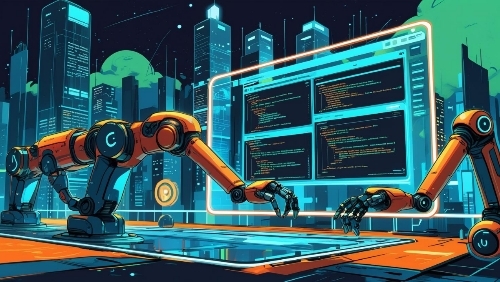
How AI is Secretly Reshaping Web Development – The Future is Here
Find out how AI transforms web development with smart tools, personalized user experiences, and automation. Learn key AI phrases, tools, and answers to burning questions.
The Role of Artificial Intelligence in Web Development
Introduction
Imagine a website that learns from its visitors, fixes its own bugs, and even designs itself. Sounds like sci-fi? Not anymore. Artificial Intelligence (AI) is silently revolutionizing web development, making sites faster, smarter, and eerily intuitive. From chatbots that mimic human conversation to algorithms that predict user behavior, AI isn’t just changing the game—it’s rewriting the rules. If you’re still building websites the old way, you’re already behind.
AI Tools for Better User Experiences
1. AI-Powered Chatbots
Chatbots like ChatGPT or Drift use natural language processing (NLP) to engage users in real-time, answering questions, booking appointments, and even handling complaints without human intervention. They learn from interactions, improving responses over time.
2. Personalized Content Recommendations
Netflix and Amazon use AI to suggest products or content based on user behavior. Tools like Dynamic Yield integrate with websites to personalize experiences, boosting engagement and sales.
3. Voice Search Optimization
With smart speakers everywhere, AI tools like Google’s Speech-to-Text help websites understand voice commands, making navigation hands-free and effortless.
4. Automated Web Design
Platforms like Wix ADI or Bookmark’s AiDA use AI to generate entire website layouts in minutes, analyzing user needs and industry trends to create custom designs.
5. AI-Driven Security
Tools like Cloudflare’s AI firewall detect and block cyber threats in real-time, protecting websites from hackers and malware before damage occurs.
Important Phrases Explained
1. Machine Learning (ML)
ML is a subset of AI where systems learn from data without explicit programming. In web development, ML predicts user behavior, optimizes layouts, and automates testing.
2. Natural Language Processing (NLP)
NLP helps machines understand human language. It powers chatbots, voice search, and sentiment analysis, making websites more interactive.
3. Predictive Analytics
AI analyzes past user data to forecast future actions, like what products a visitor might buy, allowing websites to tailor suggestions proactively.
4. Neural Networks
These AI systems mimic the human brain, recognizing patterns in images, text, and user behavior. They enhance features like facial recognition and dynamic pricing.
5. Automated A/B Testing
AI runs multiple design tests simultaneously, determining which layouts or CTAs perform best, eliminating guesswork in optimization.
Questions Also Asked by Other People Answered
1. Will AI replace web developers?
No. AI automates repetitive tasks, but human creativity, strategy, and problem-solving remain irreplaceable. Developers who embrace AI will thrive.
2. How does AI improve website speed?
AI optimizes code, compresses images, and caches content dynamically, reducing load times without manual tweaking.
3. Is AI expensive to integrate into websites?
Not necessarily. Many AI tools offer affordable APIs or free tiers, like Google’s AutoML or OpenAI’s integrations.
4. Can AI help with SEO?
Yes. AI tools like MarketMuse analyze content gaps and suggest keywords, while BrightEdge predicts SEO trends for higher rankings.
5. What’s the future of AI in web development?
Expect AI to handle everything from real-time translations to emotion-based design adjustments, creating hyper-personalized web experiences.
Summary
AI is no longer a futuristic concept—it’s actively reshaping web development. From chatbots to automated design, AI tools enhance user experiences, security, and efficiency. Understanding key terms like machine learning and predictive analytics helps demystify the tech, while addressing common questions clears doubts. The future belongs to those who leverage AI, making websites smarter, faster, and more intuitive.
#AI #WebDevelopment #MachineLearning #Chatbots #TechTrends #FutureOfWeb #AITools #WebDesign #DataScience #Automation