Why 60% of Websites Are Dying in 2026—And How the Winners Are Fixing It Fast
The Silent Website Killer Costing Businesses $300K Yearly (Most Owners Never See It)
Most websites are bleeding visitors in silence—here’s the invisible performance trap draining your revenue.
Discover why most websites fail in 2026 due to speed issues, mobile problems, and AI invisibility—plus the exact strategies smart owners use to fix Core Web Vitals, boost conversions 340%, and dominate search rankings.
Introduction
I watched a friend lose $80,000 last year because his website took 11 seconds to load.
He didn’t know it was happening. His analytics showed traffic, his content looked fine on his laptop, and he’d invested thousands in SEO. But here’s the thing—60% of his visitors were bouncing before the page even loaded. They’d click his link in Google, see a blank screen, and hit the back button before his hero image appeared.
When we finally ran a mobile speed test, the results were brutal. His fancy slider? Adding 9 seconds of load time. His high-res product photos? Uncompressed and massive. His hosting? A $4-per-month shared server that buckled under afternoon traffic.
He’s not alone. In 2026, most websites are quietly failing—not because they lack good content or design, but because they’re built on foundations that crumble under modern web standards. Google’s algorithms have evolved beyond keywords and backlinks. Users expect instant loads and seamless mobile experiences. AI-driven search is rewriting the rules entirely.
The gap between failing sites and winning ones isn’t about budget or industry—it’s about understanding what actually matters now. And honestly, most business owners have no idea their site is dying until the revenue drops become impossible to ignore.
Let me walk you through what’s really happening, why it matters more in 2026 than ever before, and what the smart owners are doing differently.
The Real Reasons Websites Are Crumbling
Speed Kills Everything
Three seconds. That’s all the patience your visitors have in 2026.
If your page takes longer than that, 60% of people leave. Just gone. They don’t wait, they don’t give you a second chance—they click back to Google and choose your competitor instead.
Every single second beyond three slashes your conversion rate by 7%. So if your page takes six seconds to load, you’ve already lost roughly 21% of potential conversions before anyone even sees your offer.
The culprits are usually hiding in plain sight. Unoptimized images are the biggest offender—that beautiful 5MB header photo you uploaded straight from your camera is forcing mobile users on 4G to wait while their data plan hemorrhages. Render-blocking JavaScript is another silent killer, especially if you’re loading third-party scripts for analytics, chatbots, or ad tracking before your actual content appears.
And cheap hosting? That $5-per-month shared server might seem like smart budgeting, but when you’re sharing resources with 500 other websites, your load times become a lottery. During peak hours, your site just crawls.
Mobile Is No Longer Optional
Here’s something that surprises people: 60% of all web traffic now comes from mobile devices. Not desktop. Not tablets. Phones.
But most websites still feel like they were designed for a 27-inch monitor and then awkwardly squeezed onto a phone screen as an afterthought.
I’m talking about buttons so small you need a stylus to tap them. Forms where the keyboard covers the input fields. Horizontal scrolling because the layout doesn’t actually fit the screen. Pop-ups that can’t be closed on mobile. Navigation menus that require three taps to find anything.
Google knows this. That’s why they switched to mobile-first indexing. Your mobile version isn’t a secondary consideration anymore—it’s the only version Google cares about for ranking your site. If your mobile experience is broken, you’re invisible in search results, regardless of how beautiful your desktop site looks.
The Technical Foundations Are Rotting
This is where things get invisible to most business owners, but it’s absolutely critical.
Your site architecture—how your pages link together, how your URLs are structured, how your content is organized—determines how efficiently Google can crawl and understand your site. Messy architecture wastes Google’s crawl budget. If your site has 500 pages but Google only crawls 200 of them regularly, the other 300 might as well not exist.
Bloated code is another massive issue. I’ve seen websites where the HTML, CSS, and JavaScript files are so tangled and redundant that search engines can’t parse what the page is actually about. When you’re using a page builder that generates 15 lines of code for every 1 line a developer would write, you’re creating digital sludge.
Schema markup is the structured data that helps AI understand your content. Without it, your carefully written blog post is just a wall of text to AI algorithms. Competitors with proper schema markup get featured in AI overviews and rich snippets. You get ignored.
And security? If you’re still running an outdated version of WordPress or haven’t updated your plugins in months, you’re one exploit away from a malware infection that tanks your rankings overnight. Plus, browsers now show “Not Secure” warnings on non-HTTPS sites, which makes visitors run for the hills.
User Experience Destroys Engagement
Speed and technical SEO get your visitors to your site. User experience determines if they stay, convert, or leave frustrated.
I see this constantly—sites with confusing messaging where visitors can’t figure out what the business actually does within five seconds. No clear calls-to-action, so people read your content and then… just leave, because they don’t know what you want them to do next.
No analytics means you’re flying blind. You can’t fix what you can’t measure. If you don’t know which pages have 80% bounce rates or where users drop off in your signup flow, you’re just guessing at improvements.
Poor internal linking creates dead ends. Visitors finish reading a blog post and have nowhere to go, so they leave. Google’s algorithms interpret this as a signal that your site isn’t valuable enough to explore.
Here’s the kicker: sites built before 2023 often can’t signal E-E-A-T—Experience, Expertise, Authoritativeness, and Trustworthiness. Google’s algorithms are obsessed with this now. If your site doesn’t clearly show who wrote your content, what their credentials are, and why they’re qualified to discuss the topic, you’re at a massive disadvantage.
—
# The 2026 Performance Trap
Core Web Vitals Are Make-or-Break
Google’s Core Web Vitals aren’t suggestions anymore—they’re ranking factors that can sink your site if you’re not compliant.
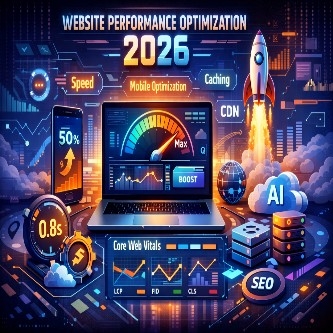
Largest Contentful Paint, or LCP, measures how long it takes for your main content to load. If it’s over 2.5 seconds, you fail. Interaction to Next Paint, or INP, tracks how responsive your site feels when users click buttons or tap links. Above 200 milliseconds feels laggy. Cumulative Layout Shift, or CLS, catches those annoying moments when you’re about to tap a button and an ad loads, pushing everything down so you tap the wrong thing. If your CLS exceeds 0.1, you’re penalized.
Non-compliant sites lose to optimized competitors even when they have better content. I’ve seen incredibly valuable, well-researched articles buried on page three of Google because the site’s Core Web Vitals were in the red. Meanwhile, thinner content on optimized sites ranks on page one.
AI Search Demands New Architecture
The rise of AI-powered search tools like ChatGPT, Google’s AI Overviews, and Perplexity has fundamentally changed what it means to be discoverable.
These systems don’t just crawl your site for keywords—they need structured data and semantic HTML to understand context. Without schema markup, your content is essentially invisible to AI answers. When someone asks an AI a question your article perfectly answers, they’ll never see it because the AI can’t parse your content properly.
Dynamic personalization is another frontier most sites are ignoring. When your site can adjust layouts, CTAs, and content based on visitor behavior in real-time, engagement can spike 40% or more. But this requires modern frameworks and AI integration that most sites built on legacy platforms simply can’t support.
Security and Scalability Can’t Be Ignored
An unpatched content management system is a ticking time bomb. Old WordPress installations with outdated plugins get exploited daily. Once you’re hacked, Google blacklists your site, visitors see malware warnings, and recovery takes weeks.
Non-headless architectures—traditional monolithic CMS setups—struggle when traffic spikes. Black Friday sale? Product launch? Viral post? Your site crashes right when you need it most. And they can’t easily integrate AI tools, chatbots, or advanced personalization without major rewrites.
What the Winners Are Doing Differently
They Build for Performance First
Smart owners stopped treating performance as an afterthought. They’re using modern frameworks like Next.js or Nuxt that generate static-dynamic hybrids—pages that load instantly because they’re pre-rendered but can still pull in fresh data when needed.
They lazy-load images so only the visible content loads initially. As you scroll, images appear just before they enter view. This cuts initial load times dramatically.
Content delivery networks, or CDNs, distribute your site across global servers so visitors access the version closest to them geographically. Someone in New York and someone in London get the same fast experience.
I know one e-commerce company that cut their load time from 12 seconds to 1.8 seconds using these techniques. Their conversions spiked 340% within a month. Same products, same prices—just faster delivery.
They Embrace AI From the Ground Up
Winners are implementing real-time personalization engines that adjust page layouts, CTAs, and product recommendations based on visitor behavior. A first-time visitor sees educational content and trust signals. A returning customer sees their abandoned cart and related products.
Automated SEO tools powered by AI continuously optimize meta descriptions, schema markup, and content structure without manual intervention. The site adapts to algorithm changes faster than any human team could manage.
Proper schema markup ensures AI systems can understand and surface their content in generative answers. When someone asks an AI about their industry, their articles appear in the response.
They pair all this technical excellence with E-E-A-T signals—author bios with credentials, verified customer testimonials, transparent company information, and cited sources.
They Design Mobile-First and Secure
The entire design process starts on a phone screen, not a desktop. Fluid grids automatically adjust layouts to any screen size. Navigation is thumb-friendly, with large tap targets in easy-to-reach zones.
HTTPS everywhere is standard—no exceptions. Every page, every asset, encrypted.
Headless CMS architecture separates the content management from the presentation layer. This means you can push the same content to your website, mobile app, smartwatch interface, or voice assistant without rebuilding everything.
They Build for Conversion, Not Just Traffic
Clear value propositions appear above the fold immediately. Visitors know what you offer and why it matters within three seconds.
Forms are short—only asking for essential information. Every additional field you require drops completion rates.
Logical funnels guide visitors from awareness to consideration to decision without confusion. Resource hubs with case studies, guides, and tools build trust before asking for the sale.
Everything is tracked. Which headlines convert better. Which CTAs get clicked. Where people drop off. Then they iterate based on data, not hunches.
They Invest in Professional Implementation
Here’s the uncomfortable truth—DIY website builders create bloat. Those drag-and-drop interfaces generate messy code, load unnecessary scripts, and create performance bottlenecks that are nearly impossible to fix without starting over.
Smart owners budget $30,000 to $50,000 for custom rebuilds with experienced developers. That sounds expensive until you realize a properly optimized site can recover $300,000 or more yearly by fixing the invisible penalty of poor technical performance.
They view it as fixing a leak in their business, not as a luxury expense.
Important Phrases Explained:
Core Web Vitals
These are specific metrics Google uses to measure user experience on websites. The three main vitals are Largest Contentful Paint which tracks loading performance, Interaction to Next Paint which measures interactivity, and Cumulative Layout Shift which quantifies visual stability. Passing these benchmarks has become essential for ranking well in search results, as Google prioritizes sites that provide smooth, fast experiences to users.
Mobile-First Indexing
This refers to Google’s practice of using the mobile version of a website as the primary version for indexing and ranking purposes. Since most searches now happen on mobile devices, Google evaluates your mobile site’s performance, structure, and content when determining search rankings. If your mobile experience is poor or incomplete compared to desktop, your rankings suffer across all devices.
Schema Markup
Schema is structured data code you add to your website that helps search engines understand your content’s context and meaning. It tells search engines whether your page is a recipe, product review, local business, or article, and provides specific details like ratings, prices, or event dates. Proper schema implementation makes your content eligible for rich snippets in search results and helps AI systems accurately interpret and surface your information.
E-E-A-T
This acronym stands for Experience, Expertise, Authoritativeness, and Trustworthiness—the criteria Google uses to evaluate content quality. Experience means the content creator has firsthand knowledge of the topic. Expertise indicates they have the necessary skills or credentials. Authoritativeness suggests they’re recognized in their field. Trustworthiness means the site is secure, transparent, and reliable. Demonstrating all four factors through author bios, credentials, citations, and transparent business information significantly improves rankings.
Headless CMS
A headless content management system separates content storage and management from the presentation layer where content is displayed. Unlike traditional CMS platforms that handle both backend and frontend together, headless systems store content in a database that can be accessed through APIs and displayed anywhere—websites, apps, digital displays, or voice assistants. This architecture provides greater flexibility, better performance, and easier integration with modern frameworks and AI tools.
Questions Also Asked by Other People Answered:
Why do fast websites rank higher in Google?
Google prioritizes fast websites because user experience directly impacts satisfaction with search results. When people click a search result and encounter a slow-loading page, they often return to Google frustrated, signaling that the result didn’t meet their needs. Fast sites keep users engaged, reduce bounce rates, and increase time on page—all metrics Google interprets as quality signals. Additionally, page speed affects crawl efficiency, allowing Google to index more of your content with its limited crawl budget.
What’s the difference between mobile-responsive and mobile-first design?
Mobile-responsive design means a website built for desktop that automatically adjusts layouts to fit smaller screens, often resulting in compromised mobile experiences. Mobile-first design means starting the entire design process on phone screens, ensuring optimal mobile experience from the beginning, then progressively enhancing for larger screens. Mobile-first typically produces faster load times, better touch interactions, and clearer information hierarchy because designers must prioritize essential content and functionality within mobile constraints.
Can AI really personalize websites in real-time?
Yes, modern AI personalization engines analyze visitor behavior, demographics, referral sources, and past interactions to dynamically adjust content, layouts, and calls-to-action instantly. The technology tracks patterns like which headlines specific visitor segments respond to, what product categories interest different demographics, and which page flows convert best for various traffic sources. This happens in milliseconds as pages load, creating unique experiences for different visitors without requiring manual segmentation or multiple page versions.
How much does poor website performance actually cost businesses?
The financial impact varies by industry and traffic volume, but the math is stark. If your site gets 10,000 monthly visitors with an average order value of $100, and your conversion rate is 2%, you’re making $20,000 monthly. If poor performance drops your conversion rate from 2% to 1.3% due to bounce rates and friction, you’re losing $7,000 monthly or $84,000 yearly. For higher-traffic sites or B2B companies with larger deal sizes, losses easily exceed $300,000 annually—purely from technical performance issues invisible to site owners.
Is it worth rebuilding an old website or just making incremental fixes?
If your site was built before 2023 on outdated platforms or frameworks, incremental fixes usually fail because fundamental architecture limits what’s possible. You can’t retrofit modern performance optimization, proper mobile-first structure, or AI integration onto legacy foundations without encountering diminishing returns. Rebuilds seem expensive upfront but address root causes rather than symptoms. However, if your site is relatively modern but just needs optimization, targeted fixes to images, code, and hosting can deliver significant improvements without full reconstruction.
Summary
Most websites fail in 2026 not from lack of content or poor design, but from invisible technical performance issues that silently bleed traffic and revenue. Speed problems, mobile experience failures, outdated technical architecture, and inability to adapt to AI-driven search create a perfect storm that tanks rankings and conversions. The gap between failing sites and winners comes down to Core Web Vitals compliance, modern frameworks like Next.js, AI-powered personalization, mobile-first design, and clean technical foundations that signal E-E-A-T to search algorithms.
Smart owners invest in performance-first builds using CDNs, lazy loading, and headless CMS architectures. They embed AI from the start for real-time personalization and automated SEO optimization. They design for phones first with secure, scalable infrastructure. They build conversion-focused architectures with clear value propositions, streamlined funnels, and data-driven iteration. While DIY builders create bloat, professional rebuilds costing $30,000 to $50,000 routinely recover $300,000 or more annually by fixing the technical penalties most business owners never even realize exist. The choice is clear—adapt to 2026 standards or quietly disappear from search results and visitor consideration.
#WebDevelopment
#CoreWebVitals
#WebsitePerformance
#MobileFirstDesign
#AISearch