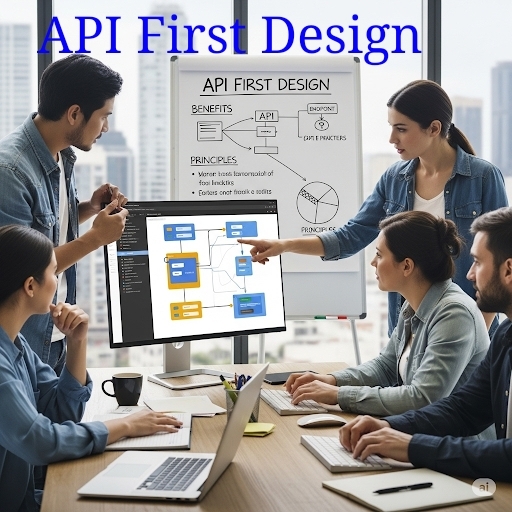
API-First Design: The Smart Developer’s Secret to Faster, Better Apps in 2025
“Why Top Companies Like Netflix and Stripe Swear by This One Development Approach”
“I nearly killed a $50,000 project because I ignored this one development principle”
Discover why API-First Design is revolutionizing software development. Learn implementation steps, real-world examples from Netflix & Stripe, plus tools that save time and prevent costly mistakes.
Introduction
Three years ago, I was six months deep into what seemed like a straightforward web application project. The client wanted a customer portal that could also support a mobile app “sometime in the future.” Simple enough, right? I built a beautiful frontend, connected it to a solid backend, and everything worked perfectly.
Then came the curveball.
“We need the mobile app ready in two months,” the client said during a Tuesday morning call that I’ll never forget. “And oh, we also want to integrate with three different third-party services.”
That’s when I realized I’d made a classic mistake. I’d built everything as one tightly coupled system. The frontend was talking directly to specific database endpoints. The logic was scattered everywhere. Adding new integrations meant tearing apart code I’d thought was finished.
I spent the next month essentially rebuilding the entire backend, creating proper API endpoints, and separating concerns that should have been separated from day one. It was painful, expensive, and completely avoidable.
That experience taught me why API-First Design isn’t just a buzzword—it’s insurance against the kind of architectural debt that can sink projects and stress out developers.
What is API-First Design?
API-First Design means exactly what it sounds like: you design and build your API before you write a single line of frontend code. Instead of creating a web application and then figuring out how to bolt on an API later, you start with a well-defined contract that describes how different parts of your system will communicate.
Think of it like planning a house before you start building. You wouldn’t pour the foundation and then figure out where the plumbing goes, right? API-First Design applies the same logic to software development.
The key principles are straightforward:
Define your API contract first using tools like OpenAPI or similar specifications. This becomes your blueprint. Build your backend to fulfill that contract exactly. Create your frontend (and any other clients) to consume the API you’ve already defined. Test everything against the original contract to ensure consistency.
This approach flips traditional development on its head. Instead of building from the inside out (database to frontend), you’re building from the contract out in all directions.
Why API-First Design Matters More Than Ever
The shift to an API-first approach continues to revolutionize how development teams work. From faster production times and better collaboration to enhanced security and API monetization, organizations that embrace this model are setting themselves up for long-term success.
Let me break down why this matters so much in 2025:
Improved Team Collaboration
API-first development encourages collaboration between frontend and backend teams, ensuring that APIs meet the needs of all stakeholders. By defining API contracts early in the development process, teams can work in parallel, reducing delays and improving efficiency.
When your API contract is defined upfront, frontend developers don’t have to wait for backend developers to finish their work. They can build against mock endpoints that follow the contract. Meanwhile, backend developers know exactly what they need to deliver. No more “Can you add this field?” conversations happening three weeks into development.
Faster Development Cycles
I used to spend weeks going back and forth with frontend developers about data formats. “Can the date be in ISO format?” “Why is this field sometimes null?” With API-First Design, these conversations happen during planning, not during crunch time.
Better Scalability
When your application grows, an API-first approach makes it easier to add new clients (mobile apps, third-party integrations, webhooks) without touching your core business logic. Your API becomes the stable foundation that everything else builds on.
Enhanced User Experience
APIs designed with multiple clients in mind tend to be more thoughtful about data structure, response times, and error handling. This translates to better experiences across web, mobile, and any other platforms you support.
How to Implement API-First Design
Here’s the step-by-step approach I wish I’d known three years ago:
Step 1: Start with Documentation
Before writing any code, create detailed API documentation using tools like OpenAPI (formerly Swagger). Define every endpoint, every request and response format, every error condition. This feels like extra work at first, but it saves massive amounts of time later.
I use tools like Stoplight Studio or SwaggerHub for this. They let you design APIs visually and generate documentation automatically.
Step 2: Create Mock Servers
Most API design tools can generate mock servers from your documentation. This lets frontend developers start building immediately, using realistic but fake data that matches your contract exactly.
Step 3: Build to the Contract
When you start building your actual backend, the API contract becomes your specification. Every endpoint should match what you documented. Every response should have the exact structure you defined.
Step 4: Test Against the Contract
Use contract testing tools to verify that your implementation matches your documentation. Tools like Pact or Postman can automatically test your real API against your documented API to catch discrepancies early.
Step 5: Version Everything
From day one, version your API. Even if you’re starting with v1.0.0 and you think you’ll never need v1.0.1, trust me—you will. Proper versioning prevents the kind of breaking changes that make other developers hate your API.
Common Challenges and How to Overcome Them
Challenge 1: “This Takes Too Long”
I hear this all the time. Yes, API-First Design requires more upfront investment. But remember my $50,000 project story? The time you spend planning prevents the time you’ll spend refactoring.
Solution: Start small. Pick one feature or one set of endpoints. Design those API-first, build them, and see how it goes. Once your team experiences the benefits, the approach will sell itself.
Challenge 2: “Requirements Keep Changing”
APIs designed thoughtfully can accommodate many changes without breaking. Focus on making your API flexible rather than perfect. Use optional fields, design for extensibility, and version intelligently.
Challenge 3: “My Team Doesn’t Know How”
This is a skill issue, not a methodology issue. Invest in training. Send developers to API design workshops. Start with simpler projects. The learning curve exists, but it’s not steep.
Real-World Success Stories
We review five case studies of impressive API-first success stories at Stripe, Netflix, Amazon, Twilio, and Checkr.
Let me share some examples that prove this isn’t just theory:
Netflix
Netflix built their entire platform API-first, which allowed them to seamlessly expand from web to mobile to smart TVs to gaming consoles. One API powers everything. When they launch on a new platform, they don’t need to build new backend services—they just build a new client that consumes the existing API.
Stripe
Stripe’s payment API is legendary in the developer community for its consistency and reliability. They designed their API before building their dashboard, which is why integrating Stripe feels so natural compared to other payment processors.
Amazon
Amazon’s internal mandate that all services must communicate through APIs led to the creation of AWS. What started as internal APIs for Amazon’s retail business became the world’s largest cloud computing platform.
These companies didn’t stumble into API-first design—they chose it strategically and built their success on it.
Best Practices for Long-Term API Success
Design for Multiple Clients
Even if you’re only building a web app today, design your API as if you’ll also support mobile, third-party integrations, and internal tools tomorrow. This mindset leads to better API design.
Focus on Developer Experience
Your API is a product that developers will use. Make it easy to understand, consistent to work with, and well-documented. Developer happiness translates to faster integration and fewer support requests.
Plan for Evolution
Use semantic versioning. Design endpoints that can grow. Make fields optional when possible. Plan deprecation strategies before you need them.
Monitor and Measure
Track API usage, response times, error rates, and developer satisfaction. APIs are not “set it and forget it” components—they need ongoing attention and optimization.
API-First vs. Other Approaches
The traditional approach I used to follow was API-Last: build the application, then add an API as an afterthought. This leads to APIs that feel bolted-on because they were literally bolted-on.
Code-First approaches generate APIs from existing code, which can work for simple cases but often produces awkward, code-centric APIs rather than user-centric ones.
Database-First approaches start with the data model and work up. This can create APIs that expose your internal data structure rather than presenting a thoughtful interface.
API-First Design puts the interface—the contract between systems—at the center of your design process. Everything else flows from that decision.
The Role of Documentation in API-First Design
In traditional development, documentation is often an afterthought. In API-First Design, documentation IS the thought. Your API documentation becomes:
– The contract between teams
– The specification for implementation
– The guide for API consumers
– The testing criteria for quality assurance
Tools like OpenAPI make this documentation executable, meaning you can generate mock servers, client SDKs, and test suites directly from your docs. Documentation stops being a burden and becomes a productive asset.
Impact on User Experience and Frontend Development
API-First Design dramatically improves frontend development in several ways:
Predictable Data
Frontend developers know exactly what data they’ll receive and in what format. No more defensive programming against unpredictable API responses.
Parallel Development
Frontend and backend teams can work simultaneously instead of sequentially. This cuts development time significantly on larger projects.
Consistent Behavior
APIs designed with multiple clients in mind tend to handle edge cases better, provide clearer error messages, and maintain consistent behavior across different use cases.
Tools and Technologies for API-First Design
Here are the tools I actually use and recommend:
Design Tools
– Stoplight Studio for visual API design
– SwaggerHub for team collaboration on API specs
– Insomnia Designer for quick prototyping
Mock Server Tools
– Prism for generating mock servers from OpenAPI specs
– WireMock for more complex mocking scenarios
– Postman’s built-in mock servers for simple cases
Testing Tools
– Postman for API testing and monitoring
– REST Assured for automated contract testing
– Pact for consumer-driven contract testing
Documentation Tools
– Redoc for beautiful API documentation
– GitBook for comprehensive API guides
– Readme.io for developer-focused documentation
The evolution of this trend includes … sanitization, and dynamic access control policies. Gartner predicts that by 2025, 40% of APIs will implement some form of self-defense capabilities, and many of these tools are incorporating AI-powered features to help with documentation and testing.
The Importance of API Versioning
I learned this lesson the hard way when I broke a client’s integration with an “small” API change. Versioning isn’t optional—it’s essential for maintaining trust and avoiding breaking changes.
Key versioning strategies:
Semantic Versioning
Use MAJOR.MINOR.PATCH (like 1.2.3) where major versions indicate breaking changes, minor versions add features, and patches fix bugs.
URL-Based Versioning
Include version numbers in your URLs (/api/v1/users, /api/v2/users). This makes versioning explicit and easy to understand.
Header-Based Versioning
Use HTTP headers to specify API versions. This keeps URLs clean but can be less obvious to developers.
Deprecation Strategy
Always provide a clear migration path when deprecating API versions. Give developers time to upgrade, communicate changes clearly, and maintain old versions longer than you think you’ll need to.
Building a Culture of API-First Thinking
The biggest challenge isn’t technical—it’s cultural. Here’s how to get your team thinking API-first:
Start Small
Pick a single feature or service. Design it API-first. Let the team experience the benefits before trying to convert entire projects.
Show, Don’t Tell
Demonstrate the difference in development speed and quality. Nothing convinces like results.
Invest in Training
Send team members to API design workshops. Bring in experts. Treat API design as a skill worth developing.
Create Standards
Develop internal API design standards. Use consistent naming conventions, error handling, and response formats across all your APIs.
Celebrate Success
When API-first design prevents a problem or accelerates development, make sure the team knows about it. Success stories build momentum.
Important Questions, Answers and Explanations
Explain how API-First Design can enhance team collaboration in software development.
API-First Design transforms team collaboration by creating a shared contract that everyone works from. Instead of backend developers building something and hoping frontend developers can use it, both teams start with the same specification. Frontend developers can build against mock data while backend developers implement the real endpoints. Product managers can review API designs to ensure they match business requirements. QA teams can test against the documented contract. This eliminates the communication gaps and rework that plague traditional development approaches.
What are some specific tools or platforms that facilitate API-First Design?
The most essential tools include OpenAPI (formerly Swagger) for API specification, which has become the industry standard. For design and collaboration, Stoplight Studio and SwaggerHub provide visual interfaces and team features. For mocking, tools like Prism and Postman can generate mock servers from API specs. For testing, Postman, REST Assured, and Pact help verify implementations match specifications. Documentation tools like Redoc and Readme.io make APIs easy for developers to understand and integrate. Each tool serves a specific part of the API-first workflow, from initial design through deployment and maintenance.
Can you provide examples of industries or companies that have successfully implemented API-First Design?
Financial technology leads the way, with companies like Stripe and Square building their entire business models on well-designed APIs. Entertainment companies like Netflix and Spotify use API-first approaches to serve content across multiple platforms seamlessly. E-commerce giants like Amazon and Shopify built API-first architectures that enabled them to expand into new markets and support third-party developers. Communication companies like Twilio and SendGrid created entire industries around API services. Even traditional industries are adopting this approach—banks use API-first design for open banking initiatives, and healthcare companies use it to integrate with electronic health records systems.
How does API-First Design influence the overall architecture of a software application?
API-First Design naturally leads to more modular, loosely coupled architectures. Instead of monolithic applications where components are tightly integrated, you get service-oriented architectures where each component communicates through well-defined interfaces. This makes applications more maintainable, testable, and scalable. It encourages separation of concerns—business logic lives in services, user interfaces consume APIs, and data storage is abstracted behind API layers. The approach also makes it easier to adopt microservices architectures, implement caching strategies, and integrate third-party services. Overall, it creates more flexible, resilient systems that can evolve without major architectural changes.
What are the long-term benefits of adopting an API-First approach for businesses?
Viewing your API as a product saves time, expands revenue opportunities, increases collaboration and innovation. A focus on decentralized governance, increased automation and consistency through style guides will improve your API program by minimizing complexity for API consumers. Businesses gain faster time-to-market for new features and platforms, reduced development costs through code reuse, and improved developer productivity through better collaboration. API-first companies often discover new revenue streams by exposing their APIs to partners and third-party developers. The approach also provides better scalability and flexibility as business needs evolve, reduced technical debt through cleaner architectures, and improved customer satisfaction through more consistent experiences across different platforms and touchpoints.
Important Phrases Explained
Contract-First Development
Contract-First Development refers to starting software projects by defining the interface contract before implementing functionality. In API development, this means creating detailed specifications that describe endpoints, data formats, error handling, and expected behaviors. This contract serves as the single source of truth for all development teams, ensuring consistency and enabling parallel development. The practice reduces miscommunication, prevents integration issues, and creates more predictable development timelines.
OpenAPI Specification
The OpenAPI Specification (formerly known as Swagger) is an industry-standard format for describing REST APIs. It provides a structured way to document API endpoints, request/response formats, authentication methods, and error codes. OpenAPI specifications are machine-readable, enabling tools to automatically generate documentation, mock servers, client SDKs, and test cases. This standardization makes APIs more discoverable, easier to integrate, and simpler to maintain across their lifecycle.
API Versioning Strategy
API Versioning Strategy encompasses the methods and practices used to manage changes to APIs over time without breaking existing integrations. Common approaches include semantic versioning (using version numbers like 1.2.3), URL-based versioning (/api/v1/), header-based versioning, and content negotiation. Effective versioning strategies include deprecation policies, migration guides, and backward compatibility considerations. The goal is to enable API evolution while maintaining trust and reliability for API consumers.
Mock Server Implementation
Mock Server Implementation involves creating fake API servers that respond with realistic data based on API specifications. These servers allow frontend developers to build and test their applications before the real backend is complete. Mock servers can simulate different response scenarios, error conditions, and edge cases, enabling comprehensive testing and parallel development. Modern tools can automatically generate mock servers from OpenAPI specifications, ensuring consistency between mocked and real implementations.
API Gateway Architecture
API Gateway Architecture refers to using a centralized entry point that manages all API traffic in a distributed system. The gateway handles cross-cutting concerns like authentication, rate limiting, logging, monitoring, and request routing. It provides a single point of control for API management while allowing backend services to focus on business logic. API gateways enable consistent security policies, simplified client implementations, and centralized analytics across all API endpoints in an organization.
Questions Also Asked by Other People Answered
How do you handle API versioning in a microservices architecture?
In microservices architectures, API versioning requires coordination across multiple services while maintaining system-wide compatibility. The key is to implement independent versioning for each service while using an API gateway to manage routing and compatibility. Services should maintain backward compatibility for at least one version, implement gradual migration strategies, and use semantic versioning to communicate the impact of changes. Container orchestration platforms can help manage different versions of services simultaneously, allowing for canary deployments and gradual rollouts of API changes.
What’s the difference between API-First and Code-First approaches?
API-First approaches begin with designing the API contract before writing implementation code, focusing on the consumer experience and interface design. Code-First approaches generate APIs from existing code, often exposing the internal structure of applications as external interfaces. While Code-First can be faster for simple cases, it often produces APIs that are difficult to use and tightly coupled to implementation details. API-First creates more user-friendly interfaces but requires more upfront planning and design investment.
How do you test APIs effectively in an API-First development process?
Effective API testing in API-First development involves multiple layers: contract testing to ensure implementations match specifications, integration testing to verify end-to-end functionality, and consumer-driven contract testing to ensure APIs meet client needs. Automated testing should include positive and negative test cases, boundary value testing, and security testing. Tools like Postman, REST Assured, and Pact can automate these tests and integrate them into continuous integration pipelines for consistent quality assurance.
What are the security considerations for API-First design?
API-First design requires security to be built into the specification from the beginning. Key considerations include authentication and authorization schemes (OAuth 2.0, JWT tokens), input validation and sanitization, rate limiting to prevent abuse, and proper error handling that doesn’t expose sensitive information. Gartner predicts that by 2025, 40% of APIs will implement some form of self-defense capabilities, indicating the growing importance of built-in security features. API specifications should document all security requirements, and implementations should be tested against common vulnerabilities like injection attacks and broken authentication.
How do you migrate from an existing monolithic application to API-First architecture?
Migrating from monolithic to API-First architecture requires a gradual, strategic approach. Start by identifying discrete business capabilities within the monolith and extracting them as APIs. Use the strangler fig pattern to gradually replace monolithic functionality with API-based services. Implement proper API design standards before extraction to ensure consistency across new services. Consider data migration strategies and implement proper monitoring to track the health of both old and new systems during transition. The process typically takes months or years for large applications and requires careful planning to avoid service disruptions.
Summary
API-First Design represents a fundamental shift in how we approach software development, prioritizing the interface contract as the foundation of all development work. This methodology addresses common development challenges like poor team collaboration, architectural debt, and integration difficulties by establishing clear contracts before implementation begins.
The approach delivers tangible benefits including faster development cycles, improved team collaboration, better scalability, and enhanced user experiences across multiple platforms. Real-world success stories from companies like Netflix, Stripe, and Amazon demonstrate that API-First Design isn’t just a development trend but a proven strategy for building scalable, maintainable systems.
Implementation requires investment in planning, documentation, and tooling, but the long-term benefits far outweigh the initial costs. Modern tools make API-First Design more accessible than ever, with automated mocking, testing, and documentation generation reducing the traditional barriers to adoption.
The key to success lies in cultural change as much as technical implementation. Teams must embrace the discipline of design-first thinking and invest in the skills and tools necessary to execute this approach effectively. Starting small, demonstrating value, and building expertise gradually provides a path for organizations to transition to API-First development.
As software systems become increasingly distributed and multi-platform, API-First Design provides the foundation for building applications that can evolve with changing business needs while maintaining consistency and reliability across all touchpoints.
#APIFirst #WebDevelopment #SoftwareArchitecture #APIDevelopment #TechStrategy #FullStackDevelopment #SoftwareEngineering #APIDesign #DeveloperTools #TechInnovation