
Blockchain Beyond the Hype: How It’s Revolutionizing Web Applications and What You Need to Know
You will discover how blockchain technology is transforming web applications. Learn about its security, decentralization, and real-world uses in this beginner-friendly guide. Perfect for web developers and tech enthusiasts!
Introduction:
Blockchain technology is no longer just a buzzword associated with cryptocurrencies. It’s a groundbreaking innovation that’s reshaping how we think about web applications, data security, and user control. But what exactly is blockchain, and why is it such a big deal for web development? Whether you’re a curious beginner or a seasoned developer looking to stay ahead of the curve, this article will break down the complexities of blockchain into simple, digestible insights. From its core concepts to real-world applications, we’ll explore how blockchain is revolutionizing the digital landscape and why it might just be the future of web technology. Ready to dive in? Let’s go beyond the hype and uncover the true potential of blockchain for web applications.
Beyond the Hype: Understanding Blockchain Technology for Web Applications
Blockchain technology is often misunderstood, but at its core, it’s a decentralized digital ledger that records transactions across multiple computers. This ensures that the data is secure, transparent, and tamper-proof. Unlike traditional databases, blockchain doesn’t rely on a central authority, making it a game-changer for web applications. Let’s break it down step by step.
Fundamental Concepts of Blockchain
A blockchain is essentially a chain of blocks, where each block contains a list of transactions. These blocks are linked together using cryptography, ensuring that once data is recorded, it cannot be altered without changing all subsequent blocks. This immutability is one of blockchain’s most powerful features.
How Blockchain Works
When a transaction occurs, it’s grouped with other transactions into a block. This block is then verified by a network of computers (nodes) using a consensus mechanism. Once verified, the block is added to the chain, and the transaction is complete. This process ensures transparency and security.
Key Components of Blockchain
– Decentralization: Unlike traditional systems, blockchain operates on a peer-to-peer network, eliminating the need for a central authority.
– Consensus Mechanisms: These are protocols that ensure all nodes agree on the validity of transactions. Examples include Proof of Work (PoW) and Proof of Stake (PoS).
– Smart Contracts: Self-executing contracts with the terms directly written into code. They automatically execute when conditions are met, reducing the need for intermediaries.
Public vs. Private Blockchains
Public blockchains, like Bitcoin and Ethereum, are open to anyone. They’re fully decentralized and transparent. Private blockchains, on the other hand, are restricted to specific users or organizations. They offer more control but less transparency.
Practical Applications of Blockchain in Web Development
Blockchain is being used to create decentralized applications (dApps), enhance data security, and streamline processes like payments and identity verification. For example, platforms like Ethereum allow developers to build dApps that run on blockchain technology.
Benefits and Challenges of Blockchain
– Benefits: Enhanced security, transparency, reduced costs, and increased efficiency.
– Challenges: Scalability issues, high energy consumption, and regulatory uncertainty.
Future Trends in Blockchain
The future of blockchain includes advancements in scalability solutions, integration with AI and IoT, and increased adoption across industries like healthcare, finance, and supply chain management.
Important Questions and Answers
1. Explain how blockchain technology can enhance security in web applications.
Blockchain enhances security by using cryptographic techniques to ensure data integrity. Each block is linked to the previous one, making it nearly impossible to alter data without detection. Additionally, decentralization reduces the risk of a single point of failure.
2. Discuss the potential impact of blockchain on data privacy and user control.
Blockchain gives users more control over their data by allowing them to manage their own information without relying on third parties. This can significantly enhance privacy and reduce the risk of data breaches.
3. Provide insights into the scalability challenges of blockchain technology.
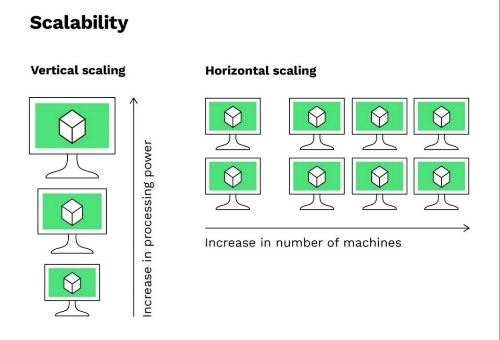
Scalability is a major challenge for blockchain. As the number of transactions increases, the network can become slow and inefficient. Solutions like sharding and layer-2 protocols are being developed to address this issue.
4. Explore how smart contracts function and their benefits for web applications.
Smart contracts are self-executing contracts with the terms directly written into code. They automatically execute when conditions are met, reducing the need for intermediaries and increasing efficiency in web applications.
5. Identify industries that are currently leveraging blockchain technology effectively.
Industries like finance (cryptocurrencies), healthcare (patient data management), and supply chain (tracking goods) are effectively leveraging blockchain technology.
6. Suggest beginner-friendly resources or courses for learning more about blockchain.
For beginners, resources like “Blockchain Basics” by Daniel Drescher, online courses on Coursera, and tutorials on YouTube are great starting points.
Explanation of Important Key Phrases
1. Blockchain Technology
Blockchain technology is a decentralized digital ledger that records transactions across multiple computers. It ensures data security, transparency, and immutability, making it a revolutionary tool for various applications.
2. Blockchain for Web Development
Blockchain for web development refers to the use of blockchain technology to create decentralized applications (dApps) and enhance security, transparency, and efficiency in web-based systems.
3. Decentralized Web
The decentralized web, or Web 3.0, is an internet infrastructure that operates on blockchain technology. It aims to give users more control over their data and reduce reliance on central authorities.
Summary
Blockchain technology is transforming web applications by enhancing security, transparency, and user control. From decentralized applications to smart contracts, its potential is vast. While challenges like scalability and regulation exist, the future of blockchain looks promising. Whether you’re a developer or a tech enthusiast, understanding blockchain is crucial in today’s digital landscape. Dive deeper into this revolutionary technology and explore its endless possibilities.
#BlockchainTechnology #WebDevelopment #DecentralizedWeb #SmartContracts #Web3 #TechInnovation #BlockchainForBeginners #DataSecurity #FutureOfTech #Cryptocurrency