Core Web Vitals 2025: The Secret Sauce to a Faster, Higher-Ranking Website
Discover how to boost your site’s speed, usability, and SEO with Core Web Vitals in 2025. Learn practical fixes for LCP, FID, and CLS—plus tools and trends to stay ahead.
Introduction
Imagine this: Your website loads so fast, visitors never hit the “back” button. Google loves it. Sales spike. But here’s the kicker—most sites fail at the basics. In 2025, Core Web Vitals aren’t just metrics; they’re the difference between thriving and disappearing. If your site stutters, shifts, or lags, you’re bleeding users (and cash). Ready to fix it? Let’s dive in.
Core Web Vitals: Why They Matter in 2025
Google’s Core Web Vitals (LCP, FID, CLS) are like a health checkup for your site. They measure speed, interactivity, and visual stability. In 2025, with mobile users dominating and attention spans shrinking, these metrics dictate SEO rankings and user trust. A slow site? Kiss 50% of visitors goodbye in 3 seconds.
The Big Three Metrics Explained
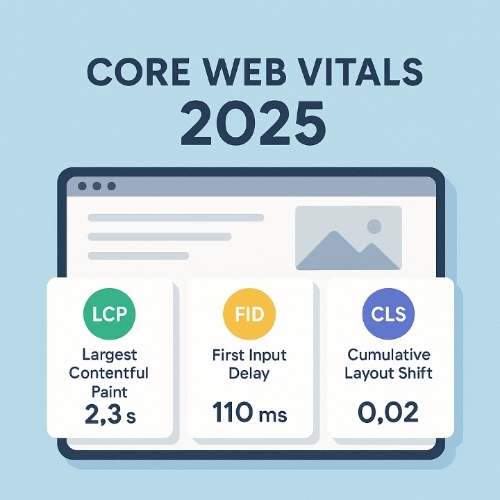
1. Largest Contentful Paint (LCP): How fast your main content loads. Aim for under 2.5 seconds.
– Fix it: Optimize images, upgrade hosting, use a CDN.
2. First Input Delay (FID): How quickly your site responds to clicks. Target under 100ms.
– Fix it: Reduce JavaScript bloat, defer non-critical scripts.
3. Cumulative Layout Shift (CLS): Measures annoying layout jumps. Keep it below 0.1.
– Fix it: Set image dimensions, avoid late-loading ads.
Common Pitfalls Killing Your Scores
– Giant images (LCP killer).
– Render-blocking JavaScript (FID nightmare).
– Dynamic ads shifting content (CLS disaster).
Tools to Monitor Core Web Vitals
– Google PageSpeed Insights: Free, detailed reports.
– Lighthouse: Chrome’s built-in auditor.
– WebPageTest: Advanced waterfall analysis.
Case Study: How Site X Boosted Conversions by 30%
By compressing images, lazy-loading videos, and minimizing CSS, Site X slashed LCP from 4s to 1.8s. Revenue soared.
Future Trends for 2025
– AI-driven performance optimizations.
– Edge computing for faster delivery.
– Google’s increasing focus on mobile-first indexing.
Mobile Optimization: Non-Negotiable
60% of traffic comes from mobile. Test on real devices, not just desktops.
Balancing Beauty and Speed
Use modern formats like WebP, skeleton screens, and progressive loading. Ditch heavy carousels.
Maintenance Checklist
– Audit monthly.
– Monitor third-party scripts.
– Test after every update.
Important Questions, Answers and Explanations
1. Can you elaborate on specific tools that can help monitor Core Web Vitals?
Yes! Google PageSpeed Insights, Lighthouse, and WebPageTest are top picks. They break down LCP, FID, and CLS with actionable tips.
2. What are some common mistakes to avoid when trying to improve these metrics?
Overlooking mobile performance, ignoring third-party scripts, and skipping regular audits are big blunders.
3. How can I ensure my website remains optimized for performance in the long term?
Schedule quarterly audits, automate image compression, and stay updated on Google’s algorithm changes.
4. Are there particular industries or types of websites that should prioritize certain metrics over others?
E-commerce sites must nail CLS (shopping carts shifting = lost sales). Blogs should focus on LCP (fast reads = happy readers).
5. What are the latest trends in web performance that I should be aware of for 2025?
Edge computing, AI-powered optimizations, and Google’s heavier mobile weighting are key.
Important Phrases Explained:
1. Largest Contentful Paint (LCP): Measures loading performance. Slow LCP? Users bounce.
2. First Input Delay (FID): Tracks interactivity. Laggy buttons = frustration.
3. Cumulative Layout Shift (CLS): Quantifies visual stability. Shifting text = rage clicks.
4. Mobile-First Indexing: Google’s priority. Mobile speed = desktop rankings.
5. Edge Computing: The future of speed. Servers closer to users = faster loads.
Questions Also Asked by Other People Answered:
1. Does Core Web Vitals affect SEO directly?
Absolutely. Google uses them as ranking factors. Poor scores = lower visibility.
2. How often should I check my Core Web Vitals?
Monthly, or after major site changes. Tools like CrUX dashboards help.
3. Can a good CDN fix all my speed issues?
Not alone. Combine CDNs with image optimization and clean code.
4. Are WordPress sites worse for Core Web Vitals?
Not inherently, but bloated plugins can tank performance. Choose lightweight themes.
5. Is CLS worse for ads-heavy sites?
Yes. Late-loading ads cause shifts. Use reserved ad spaces.
Summary
Core Web Vitals are your site’s pulse. In 2025, speed, stability, and responsiveness define success. Optimize LCP, FID, and CLS with smart fixes—compress images, streamline code, and test relentlessly. Stay ahead with trends like edge computing. Your users (and Google) will thank you.
#CoreWebVitals #WebPerformance #SEO2025 #MobileOptimization #FastWebsites #UserExperience #WebDev #GoogleRanking #PageSpeed