The 2025 Blueprint for SEO and AI Content That Actually Ranks
“Is Your AI Content Invisible? Here’s How to Fix It in 2025.”
Stop creating AI content that Google ignores. Learn the 5 proven strategies to optimize your AI-powered website for E-E-A-T, user intent, and topical authority in 2025. Get your content seen by the right audience.
Introduction
I almost tanked my own website.
It was early 2024, and I was feeling pretty clever. I had integrated an AI writing tool into my workflow, and the content was flowing faster than ever. I was publishing articles left and right, convinced I was about to conquer the search engine results pages.
But then, my analytics told a different story. My traffic from Google was dropping. Not just a little, but a steady, heart-sinking decline. My shiny new AI content, which read perfectly fine to me, was being completely ignored. It was like I was handing out flyers in an empty room.
That failure was my wake-up call. I realized that the rules of SEO had shifted beneath my feet. It wasn’t enough to just produce grammatically correct, keyword-stuffed articles anymore. Google was getting smarter, and it was demanding more from AI-generated content. I had to learn, adapt, and fundamentally change my approach.
What I discovered transformed not just my traffic, but my entire philosophy on content creation. Here’s how to optimize your AI-powered website content for SEO in 2025, learned from the mistake that almost cost me my readership.
The New SEO Landscape: It’s All About Experience
The biggest lesson I learned is that Google’s 2025 algorithm isn’t just judging your words. It’s judging the human experience behind them. The old concept of E-A-T (Expertise, Authoritativeness, Trustworthiness) has officially evolved into E-E-A-T, with that extra ‘E’ standing for Experience.
Google wants to know: does the person or entity behind this content have first-hand, lived experience with the topic? This is a direct response to the flood of generic AI content. You can’t just have an AI write a review for a coffee shop in Seattle if it’s never tasted the coffee. You can’t get ranked for “best hiking boots for the Appalachian Trail” if you’ve never laced up a pair and faced the terrain.
This is where most early AI content fails. It summarizes; it doesn’t experience.
So, how do you inject ‘Experience’ into AI-powered content?
First, use AI as your foundation layer, not the finished product. I started prompting my AI tool to create a comprehensive draft or an outline based on data and existing information. Then, I, as a human with knowledge in my field, step in.
I add my own anecdotes. For a piece on data management, I’ll insert a short story about a time I helped a small business in Chicago clean up their customer database and how it doubled their email open rates. For a web development post, I’ll explain the specific challenge a client in Austin faced with their site speed and exactly how we solved it.
These small, real-world stories are the fingerprints that prove a human was here. They are the evidence of experience that Google and, more importantly, your readers, are looking for.
Five Strategies for AI Content That Ranks in 2025
Based on my journey back from the SEO abyss, here are the five core strategies you need to implement now.
- Become the Expert Conductor, Not the Robot Typist.
Your role has changed. You are no longer just a writer; you are an editor and a conductor. The AI is your orchestra—powerful and capable, but it needs your direction.
Start with strategic prompting. Instead of “write an article about SEO,” your prompt should be: “Act as an experienced SEO consultant based in the US. Create a detailed outline for a blog post targeting small business owners in America on how to optimize their Google Business Profile for local search, focusing on the top 5 actionable tips for 2025.”
Then, take that outline and fill it with your unique voice and examples. Correct any factual inaccuracies. Add links to relevant American resources, like the U.S. Small Business Administration website or case studies from well-known U.S. companies. You are layering your expertise on top of the AI’s efficiency.
- Double Down on Topical Authority, Not Just Keywords.
Google doesn’t just rank pages; it ranks websites as authorities on specific subjects. Chasing individual keywords with one-off AI articles is a losing battle.
Instead, use AI to help you map out a complete content hub for a core topic. For example, if your niche is web development, your core topic could be “Website Performance.”
You could prompt your AI to brainstorm all the subtopics related to website performance: Core Web Vitals, hosting for U.S. audiences, image optimization tools, CDN services popular in the States, etc. Then, you can systematically create clusters of content around these subtopics, interlinking them heavily.
This signals to Google that your site is a comprehensive resource on website performance, making it much more likely to rank for all related queries, not just one.
- Structure for Humans and Featured Snippets.
AI often produces long blocks of text. Today’s readers, especially in the fast-paced American market, scan. They want answers fast.
Use clear, descriptive subheadings. Break up text with bullet points and numbered lists. This not only improves readability but also increases your chances of snagging a Google Featured Snippet—that coveted position zero at the top of the search results.
Ask your AI to present information in a listicle or step-by-step format where appropriate. A query like “how to optimize images for web” is almost always answered with a list. Structure your content to directly answer that question in a scannable way.
- Optimize for User Intent with a Local Flavor.
Why is someone searching for “best project management software”? Are they a solo entrepreneur looking for a free tool, or a project manager at a large enterprise evaluating options for their 50-person team? This is user intent.
Your AI content must satisfy this intent. Furthermore, for a U.S. audience, adding a regional layer is crucial. When writing about compliance, mention HIPAA or CCPA. When discussing e-commerce, talk about platforms like Shopify or BigCommerce that dominate the American market.
By tailoring the content to the specific needs and context of your American users, you increase engagement metrics like time on page and reduce bounce rates, which are strong positive ranking signals.
- Implement a Rigorous Human Editorial Process.
This is the non-negotiable final step. Before hitting publish, you must:
Fact-Check Everything: AI models can hallucinate and present outdated or incorrect information as fact. Verify all data, statistics, and claims.
Add Unique Media: Incorporate your own screenshots, charts, or short videos. A custom-made chart comparing load times of different U.S. web hosts is pure gold.
Read it Aloud: Does it sound like a human wrote it? Does it flow? If it sounds robotic and stilted, rewrite those sections.
This human touch is the final polish that transforms a generic AI draft into a trustworthy, authoritative, and rank-worthy piece of content.
Important Phrases Explained
Entity-Based Search: This refers to Google’s shift from understanding just keywords to understanding real-world things, or “entities” (people, places, things, concepts). Optimizing for entities means ensuring your content clearly defines its subject and its relationship to other subjects, helping Google build a knowledge graph around your topic.
E-E-A-T: Standing for Experience, Expertise, Authoritativeness, and Trustworthiness, this is the cornerstone of Google’s quality guidelines. It’s the framework they use to assess whether content is valuable and reliable, especially for YMYL (Your Money or Your Life) topics.
Topical Authority: This is the concept that a website is seen as a comprehensive expert on a specific subject matter because it covers that topic in immense depth and breadth, rather than just touching on it superficially.
User Intent: Also known as “search intent,” this is the primary goal a user has when typing a query into a search engine. It can be informational (to learn), navigational (to find a specific site), commercial (to research before buying), or transactional (to make a purchase).
Semantic SEO: This is the practice of optimizing your content not just for a primary keyword, but for all the related terms, concepts, and questions that surround that topic. It helps search engines understand the context and deeper meaning of your content.
Questions Also Asked by Other People Answered
Will Google penalize me for using AI content?
Google states it does not penalize AI-generated content. However, it does penalize content that is low-quality, spammy, or created primarily to manipulate search rankings, regardless of how it was made. The key is to use AI responsibly to create helpful, people-first content that demonstrates E-E-A-T.
How can I make my AI content sound more human?
The best way is to actively edit and rewrite. Read the content aloud and change any awkward phrasing. Inject your personal voice, use contractions (like “it’s” and “you’re”), and add short, personal anecdotes or opinions that reflect your real experience.
What AI content tools work best for SEO?
The best tool is the one you can use effectively within a strong human editorial process. Many popular tools have built-in SEO features that help with keyword research and content scoring. However, the tool itself is less important than your strategy. Focus on how you use it, not which one you use.
How much should I edit AI-generated content?
You should edit it significantly. Think of the AI’s output as a first draft—a raw block of marble. Your job as the human editor is to sculpt that marble into a fine statue. This involves fact-checking, restructuring, adding unique insights, and ensuring it aligns perfectly with user intent.
Can AI help with technical SEO?
Absolutely. AI can be a powerful assistant for technical SEO tasks. It can analyze large datasets to identify crawl errors, generate structured data markup (like JSON-LD), help audit site speed performance, and even suggest internal linking opportunities based on content analysis.
Summary
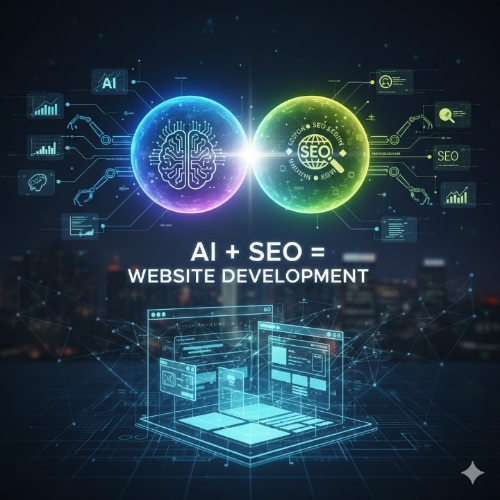
The future of SEO in the age of AI isn’t about replacing humans; it’s about a powerful collaboration. My own failure taught me that simply mass-producing AI content is a fast track to obscurity. The winning strategy for 2025 is to use AI as a powerful drafting tool, while you, the human expert, take the lead as the editor, the storyteller, and the source of genuine experience. By focusing on E-E-A-T, building topical authority, and rigorously optimizing for both user intent and real-world relevance for your American audience, you can create AI-powered content that doesn’t just get read—it gets ranked. Stop letting the AI write for bots, and start directing it to write for people.
#AIcontent
#SEOoptimization
#GoogleSEO
#ContentMarketing
#DigitalMarketing
#SearchEngine
#WebsiteDevelopment
#TechTips
#USBusiness
#EAT