
Unlock Cloud Power: Data Storage Secrets You Won’t Believe!
Discover the latest cloud computing trends revolutionizing data storage and management. Learn how to leverage the cloud for efficiency and security. Click to explore!
Introduction
Ever feel like your digital life is bursting at the seams? Photos, videos, documents—they multiply faster than you can manage. And let’s not even talk about the headache of keeping it all secure. In the world of web technologies, we’ve seen a massive shift towards a solution that’s not just convenient, but downright transformative: cloud computing. It’s no longer just a buzzword; it’s the backbone of how we handle data today. Forget the days of clunky external drives and endless server maintenance. We’re diving deep into the trends that are reshaping how we store and manage information, and trust me, you’ll want to be part of this revolution. Let’s explore how the cloud is evolving and how you can harness its power to simplify and secure your digital world.
Cloud Computing Trends: Leveraging the Power of the Cloud for Data Storage and Management
The cloud has fundamentally changed how businesses and individuals approach data. We’re no longer confined to physical servers; instead, we’re tapping into a vast, interconnected network that offers scalability, flexibility, and cost-effectiveness. But the cloud isn’t static. It’s constantly evolving, driven by innovation and the ever-growing demand for efficient data solutions.
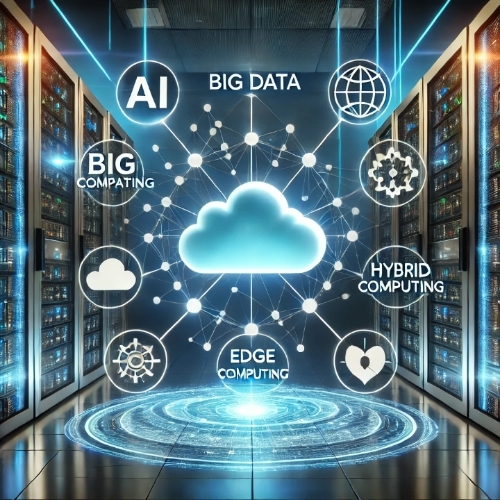
One of the most significant trends is the rise of hybrid and multi-cloud strategies. Businesses are realizing that a one-size-fits-all approach doesn’t work. They’re opting for hybrid models that combine on-premises infrastructure with cloud services, allowing them to balance control and flexibility. Multi-cloud strategies, on the other hand, involve using services from multiple cloud providers, mitigating the risk of vendor lock-in and maximizing performance.
Another key trend is the increasing focus on edge computing. As data volumes explode, processing information closer to the source becomes crucial. Edge computing brings processing power to the edge of the network, reducing latency and enabling real-time applications. Think of it as bringing the cloud’s brainpower closer to where it’s needed most. This is particularly relevant for IoT devices, where rapid data analysis is essential.
Artificial intelligence (AI) and machine learning (ML) are also playing a significant role in shaping cloud computing trends. Cloud providers are offering AI-powered services that automate data management, enhance security, and provide valuable insights. For example, AI algorithms can detect anomalies in data patterns, preventing security breaches and optimizing storage usage. This is a game-changer for businesses dealing with massive datasets.
Security remains a top priority, and cloud providers are investing heavily in robust security measures. Zero trust security models, which assume that no user or device should be trusted by default, are gaining traction. This approach involves stringent authentication and authorization processes, ensuring that only authorized users can access sensitive data.
Serverless computing is another trend worth noting. It allows developers to build and run applications without managing servers. This not only simplifies development but also reduces costs, as you only pay for the resources you use. Serverless architectures are ideal for applications with fluctuating workloads.
Data governance and compliance are also gaining prominence. As regulations like GDPR and CCPA become more stringent, businesses are seeking cloud solutions that offer built-in compliance tools. Cloud providers are responding by offering services that help organizations manage data privacy and security.
Furthermore, the rise of containerization and Kubernetes is streamlining application deployment and management. Containers provide a lightweight and portable way to package applications, while Kubernetes orchestrates the deployment and scaling of these containers. This is revolutionizing how applications are developed and deployed in the cloud.
Finally, we’re seeing a growing emphasis on sustainability in cloud computing. Cloud providers are investing in renewable energy and energy-efficient infrastructure to reduce their environmental impact. This is not only good for the planet but also aligns with the growing demand for environmentally responsible business practices.
In essence, the cloud is becoming more intelligent, secure, and sustainable. By embracing these trends, you can unlock the full potential of cloud computing and transform how you manage and store data.
Summary
Cloud computing is evolving rapidly, driven by innovation and the need for efficient data management. Trends like hybrid and multi-cloud strategies, edge computing, AI-powered services, and robust security measures are reshaping the landscape. Serverless computing, containerization, and a focus on sustainability are also playing crucial roles. By understanding and leveraging these trends, businesses and individuals can unlock the power of the cloud, streamlining data storage, enhancing security, and optimizing resource utilization. The future of data management is undoubtedly in the cloud, and staying informed about these trends is essential for success in today’s digital world.
#cloudcomputing,
#datastorage,
#webtechnology,
#cloudtrends,
#digitaltransformation,
#techinnovation,
#cybersecurity,
#edgecomputing,
#serverless,
#cloudsecurity