
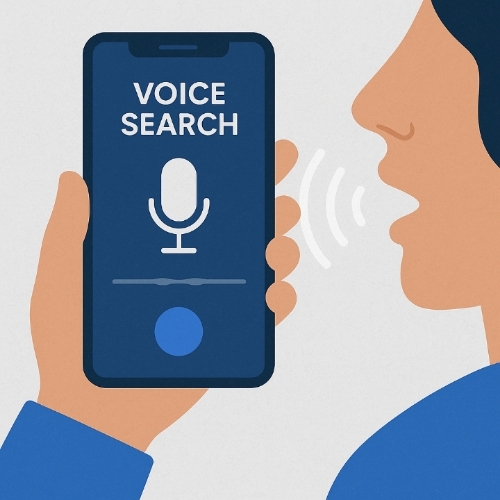
Voice Search Domination: How to Optimize Your Website for 2025 and Beyond
Want your website to rank higher in voice search results? Discover the top strategies to optimize your site for voice search in 2025 and stay ahead of the competition. Learn how now!
How to Optimize Your Website for Voice Search in 2025
Introduction
Imagine this: A potential customer asks their smart speaker, “Where can I find the best web design services near me?” If your website isn’t optimized for voice search, the answer won’t be your business.
Voice search is no longer a futuristic concept—it’s here, and it’s growing fast. By 2025, experts predict that over 50% of all online searches will be voice-based. Whether it’s through Siri, Alexa, or Google Assistant, people are using their voices to find information faster than ever.
If you want your website to stay relevant and attract more traffic, you need to adapt. In this guide, we’ll break down the best strategies to optimize your site for voice search in 2025. From conversational keywords to mobile-friendly design, these tips will help you stay ahead of the curve.
Why Voice Search Optimization Matters
Voice search is different from traditional typing. People speak naturally, using full sentences and questions. For example, instead of typing “best pizza NYC,” they might ask, “Where can I find the best pizza near me?”
Search engines prioritize websites that match these natural language patterns. If your content isn’t optimized for voice queries, you’re missing out on a huge audience.
Key Strategies to Optimize for Voice Search
- Use Conversational Keywords
Since voice searches are more conversational, your content should be too. Focus on long-tail keywords and phrases that sound like real questions. Tools like AnswerThePublic or Google’s “People Also Ask” section can help you find common voice search queries.
- Optimize for Local Searches
Many voice searches are local. Phrases like “near me” or “closest” are common. Make sure your business is listed on Google My Business and other directories. Include your location and service areas in your content.
- Improve Page Load Speed
Voice search users expect quick answers. If your site takes too long to load, search engines will skip it. Use tools like Google PageSpeed Insights to check and improve your site’s speed.
- Create FAQ Sections
Voice assistants often pull answers from FAQ sections. Structure your content in a question-and-answer format to increase your chances of being featured.
- Focus on Mobile Optimization
Most voice searches happen on mobile devices. Ensure your site is mobile-friendly with responsive design, easy navigation, and readable text.
- Use Structured Data Markup
Structured data helps search engines understand your content better. Schema markup can highlight key information like business hours, reviews, and product details, making it easier for voice assistants to pull your data.
- Keep Content Clear and Concise
Voice search results favor short, direct answers. Avoid long-winded explanations. Get straight to the point while keeping your content informative.
- Leverage Featured Snippets
Featured snippets (position zero) are often the source of voice search answers. Optimize your content to target these snippets by providing clear, concise answers to common questions.
- Prioritize Security with HTTPS
Search engines favor secure websites. If your site isn’t HTTPS, you could lose ranking positions. Ensure your site has an SSL certificate.
- Test with Voice Assistants
Regularly test how your site performs by asking voice assistants relevant questions. If your content doesn’t appear, adjust your strategy.
Summary
Voice search is transforming how people find information online. By 2025, optimizing for voice search won’t be optional—it’ll be essential. To stay ahead, focus on conversational keywords, local SEO, fast load times, and mobile-friendly design. Structured data, FAQs, and featured snippets will also boost your visibility.
Start implementing these strategies today to ensure your website ranks high in voice search results. The future of search is voice-driven—don’t get left behind.
#VoiceSearch #SEO2025 #DigitalMarketing #WebOptimization #TechTrends #SearchEngineOptimization #VoiceFirst #MobileSEO #FutureOfSearch #SmartAssistant