The Future Of Voice Search: Optimizing Your Website For The Conversational Web
Introduction:
In today’s world, where digital assistants like Siri, Alexa, and Google Assistant have become an integral part of our daily lives, the way we search for information is rapidly evolving. Voice search is no longer a novelty; it’s a growing trend that’s transforming the online landscape. As more and more users embrace the convenience of voice commands, optimizing websites for this new search method has become paramount for businesses seeking to enhance their online visibility and engage users effectively.
This comprehensive guide promises to into the intricacies of voice search optimization, providing insights and actionable strategies to help you stay ahead of the curve. From understanding the nuances of voice search behavior to implementing techniques like long-tail keyword targeting and natural language optimization, this article equips you with the knowledge and tools necessary to adapt to the changing search landscape. Discover practical tips, case studies, and expert advice that will empower you to create a seamless and engaging voice search experience for your users.
As we dig deeper into the article we will explore the evolving landscape of voice search and its impact on user behavior.
We will also provide insights on optimizing websites for voice search, emphasizing techniques like long-tail keywords and natural language optimization.
Also we will discuss the significance of adapting to new search methods like voice to enhance website visibility and user engagement. Furthermore the importance of user trends in content creation and website optimization will be addressed. We however promise to maintain a friendly tone suitable for beginners, focusing on simplicity and avoiding jargon.
Voice search is rapidly gaining traction and altering the way users interact with websites and search engines. As virtual assistants like Siri, Alexa, and Google Assistant become more prevalent, optimizing websites for voice search is crucial for enhancing visibility and engaging users effectively.
Here are some key insights and techniques to consider:
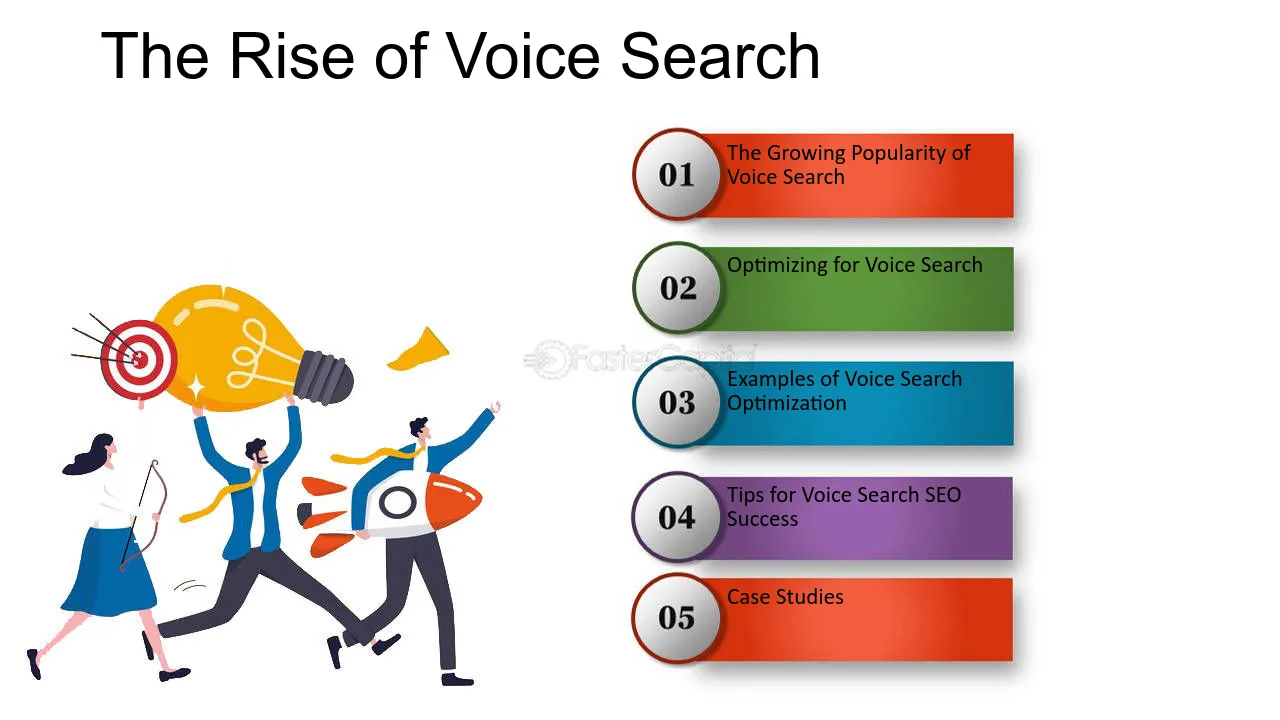
The Rise of Voice Search:
- Voice search queries tend to be longer and more conversational, mirroring natural speech patterns.
- Users often phrase voice searches as questions, seeking direct and concise answers.
- The growing popularity of smart speakers and mobile voice assistants is driving this shift in user behavior.
Optimizing for Voice Search:
- Focus on long-tail keywords: Longer, more specific keyword phrases that align with natural language queries.
- Example: Instead of “SEO tips,” optimize for “how to optimize my website for voice search.”
- Employ a conversational tone: Craft content that sounds natural when read aloud, mimicking how users speak.
- Aim for clear, concise answers: Users expect direct responses to their voice queries.
- Leverage question-based content: Create content that directly answers common questions in your niche.
Benefits of Voice Search Optimization:
- Improved user experience: Users can find information more efficiently through voice interactions.
- Enhanced visibility: Optimized content is more likely to rank for voice search queries.
- Increased engagement: Engaging users through their preferred search methods fosters loyalty.
Content and Website Optimization Strategies:
- Conduct keyword research focused on voice search queries
- Incorporate long-tail keywords and natural language phrases throughout your content
- Structure content using headings and subheadings that resemble questions
- Implement schema markup to enhance rich results and featured snippets
- Ensure your website is mobile-friendly and loads quickly for voice searchers on the go
- Monitor and adapt to emerging voice search trends and user behaviors
By proactively optimizing your website for voice search, you can stay ahead of the curve, improve user experience, and enhance your online visibility in an increasingly voice-centric digital landscape.
Overview of Voice Search Trends:
Voice search is experiencing rapid growth, fueled by the increasing adoption of smart speakers and virtual assistants. According to a recent study, over 40% of adults now use voice search on a daily basis. This trend is expected to continue as the technology becomes more sophisticated and seamlessly integrated into various devices and platforms.
Impact of Voice Search on User Behavior:
Voice search is reshaping user behavior by allowing for more natural and conversational interactions with search engines. Users are becoming accustomed to asking questions and receiving direct, concise answers, rather than scanning through search results. This shift towards a more conversational search experience is influencing the way content is created and consumed.
Techniques for Optimizing Websites for Voice Search:
- Employ long-tail keywords and natural language phrases
- Structure content using questions and direct answers
- Leverage schema markup for rich snippets and featured snippets
- Optimize for mobile devices and fast loading times
- Incorporate conversational language and a natural tone
Importance of Long-Tail Keywords:
Long-tail keywords are essential for voice search optimization because they more closely resemble the way users phrase voice queries. Instead of short, broad keywords, voice searchers tend to use longer, more specific phrases that mimic natural speech patterns. Incorporating these long-tail keywords into your content can significantly improve visibility for voice searches.
Benefits of Natural Language Optimization:
Optimizing your content for natural language queries and conversational tone offers several advantages:
- Improved user experience by providing direct, concise answers
- Enhanced relevance for voice search queries
- Increased engagement with users who prefer conversational interactions
- Future proofing your content for the growing voice search landscape
Adapting to New Search Methods like Voice:
As user behavior continues to evolve, it’s crucial to adapt your website and content strategy to align with emerging search methods like voice search. Failing to optimize for these new search trends can result in decreased visibility, reduced engagement, and a suboptimal user experience.
Significance of User Trends in Content Creation:
Understanding and adapting to user trends is essential for creating effective and engaging content. By closely monitoring how users search, consume information, and interact with websites, you can tailor your content to meet their preferences and expectations. This user-centric approach ensures that your content remains relevant and valuable, fostering better engagement and visibility.
Enhancing Website Visibility and User Engagement:
Optimizing your website for voice search not only improves visibility in search engine results but also enhances user engagement. By providing a seamless and intuitive experience for voice searchers, you can increase user satisfaction, build brand loyalty, and ultimately drive more traffic and conversions to your website.
Case Studies Showcasing Successful Implementation of Voice Search Optimization Techniques:
- Domino’s Pizza: Domino’s implemented a voice-ordering system that allows customers to place orders using voice commands. By optimizing their website and mobile app for voice search queries related to pizza orders, they saw a significant increase in online sales and customer engagement.
- AARP: The nonprofit organization AARP recognized the growing importance of voice search among their target audience of older adults. They optimized their website content to provide clear, concise answers to common questions about retirement, healthcare, and financial planning. This strategy resulted in improved visibility for voice search queries and better engagement with their audience.
Statistics Highlighting the Rise of Voice Search Usage and Its Implications for Website Owners:
- According to a study by Google, 27% of the global online population is using voice search on mobile devices.
- Comscore predicts that by 2022, 50% of all online searches will be conducted via voice.
- A report by Juniper Research suggests that by 2023, there will be 8 billion digital voice assistants in use worldwide.
These statistics highlight the growing prevalence of voice search and the need for website owners to adapt their SEO strategies accordingly to remain visible and relevant.
Practical Examples Demonstrating the Difference Between Traditional SEO and Voice Search Optimization Strategies:
- Traditional SEO: Optimizing for the keyword “best running shoes” might involve creating content around product descriptions, reviews, and comparisons, targeting users who are actively researching and browsing for running shoes.
- Voice Search Optimization: For the voice query “what are the best running shoes for flat feet?” the optimized content should provide a direct, concise answer that addresses the specific concern of the user. The content should be structured in a conversational manner, using natural language and long-tail keywords like “running shoes for flat feet.”
Tips on Creating Conversational Content that Resonates with Voice Search Users:
- Use a natural, conversational tone: Write as if you’re speaking directly to the user, avoiding overly formal or technical language.
- Incorporate long-tail keywords and question phrases: Include the types of queries users might ask via voice search.
- Structure content using clear headings and subheadings: Break down your content into easily scannable sections that resemble questions and answers.
- Provide concise, direct answers: Voice searchers expect quick, to-the-point responses, so avoid lengthy introductions or unnecessary details.
- Leverage schema markup: Use structured data to enhance the visibility of your content for rich snippets and featured snippets in voice search results.
Insights on the Future of Voice Search Technology and Its Potential Impact on Website Optimization Strategies:
As voice search technology continues to evolve, we can expect even more advanced natural language processing capabilities and seamless integration with various devices and platforms. This could lead to:
- More conversational and contextual search experiences, where voice assistants can understand and respond to complex queries based on user context and intent.
- Increased adoption of voice search across a wider range of industries and applications, such as healthcare, education, and smart home devices.
- The need for website owners to continuously adapt their optimization strategies to keep up with advancements in voice search technology and changing user behaviors.
- Greater emphasis on structured data and semantic understanding, as voice assistants strive to provide more accurate and relevant responses.
- Potential shifts in content formats, with a focus on audio and multimedia content optimized for voice-based interactions.
Website owners and content creators who stay ahead of these trends and proactively optimize for voice search will be better positioned to maintain visibility, engage users effectively, and capitalize on the growing voice search market.
Examples of Websites Effectively Optimized for Voice Search:
- Snaptravel: This online travel booking website has optimized its content for voice search by incorporating conversational language and long-tail keywords that mimic how users might ask about travel deals or accommodations via voice assistants. For instance, they have content addressing queries like “Find me a hotel near Central Park for this weekend.”
- Food Network: The popular cooking website has structured its recipes and cooking-related content in a question-and-answer format, making it easier for voice assistants to surface relevant information when users ask queries like “How do I bake a perfect chocolate cake?”
- WebMD: The healthcare information website has optimized its content for voice search by providing concise answers to common medical questions, leveraging schema markup, and ensuring its content is mobile-friendly for on-the-go voice searches.
How Businesses Can Leverage Voice Search Trends:
- Conduct keyword research focused on long-tail, conversational queries related to their products or services.
- Create content that directly answers common questions in a clear, concise manner, using a natural, conversational tone.
- Implement schema markup and structured data to enhance visibility for rich snippets and featured snippets in voice search results.
- Optimize website content and structure for mobile devices, as many voice searches occur on smartphones and smart speakers.
- Monitor and adapt to emerging voice search trends and user behaviors to stay ahead of the curve.
Key Differences Between Traditional SEO and Voice Search Optimization:
- Keyword Targeting: Traditional SEO often focuses on shorter, broader keywords, while voice search optimization requires targeting long-tail, conversational keywords and phrases.
- Content Structure: Traditional SEO content may be more descriptive and product-focused, while voice search optimization demands a question-and-answer format with direct, concise responses.
- User Intent: Traditional SEO aims to rank for users actively researching and browsing, while voice search optimization targets users seeking quick, specific information through natural language queries.
- Featured Snippets: Voice search prioritizes content that can be easily extracted as a featured snippet or rich result, making schema markup and structured data more crucial.
- Mobile Optimization: While mobile-friendliness is important for traditional SEO, it’s essential for voice search, as many voice queries originate from mobile devices and smart speakers.
By understanding these key differences and adapting their strategies accordingly, businesses can effectively optimize for voice search, improve their online visibility, and provide a better user experience for their target audience.
Austin Okonji is our resident Content Strategist and SEO expert, equipped with years of experience and a passion for driving organic traffic and improving online visibility. With a proven track record of success, Austin combines technical expertise with strategic insights to help businesses thrive in the digital landscape. (jayvickswriters@gmail.com)